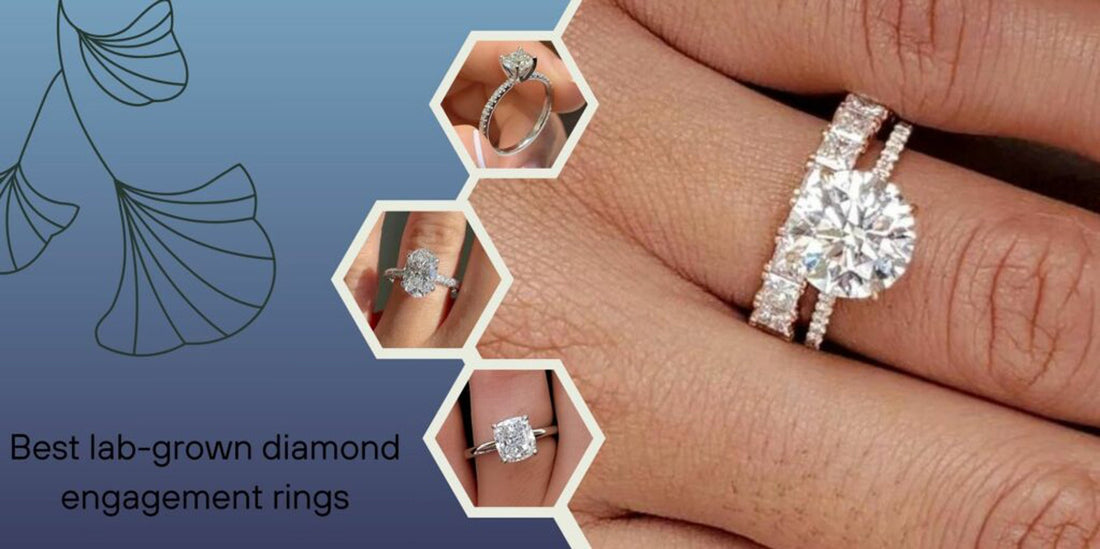
Best Lab-grown Diamond Engagement Rings
Best Lab-Grown Diamond Rings in 2026
Ring shopping starts exciting and somehow ends with you drowning in tabs, second-guessing every decision you thought you'd made. And at some point, lab-grown diamonds came up. Maybe a friend mentioned them. Maybe the price difference caught your eye. Either way — you're here now, so let's actually get into Lab-grown Diamond Engagement Rings.
So... Are Lab-Grown Diamonds the Real Deal?
This is the first thing everyone asks, and honestly, it's a fair one because the name makes it sound like there's a catch somewhere.
There isn't.
A lab-grown diamond is grown using the same carbon structure, same process conditions, and same result as a diamond that formed underground. The hardness is the same — 10 out of 10. The brilliance is the same. GIA certifies them. IGI certifies them. A jeweller looking at both through a loupe cannot tell the difference without specialised equipment.
The only thing different is where it came from. That's it.

14 K White Gold Lab Grown Diamond
Why Couples in 2026 Are Going This Route of Lab-grown Diamond Engagement Rings
It comes down to the price, mostly
Lab-grown diamonds cost 50–70% less than mined diamonds at the same size and quality. Not because anything about the stone is lesser — purely because there's no mining, no extraction, no global supply chain adding cost before the stone even reaches a jeweller.
What this looks like practically:
-
A $6,000 mined diamond ring drops to roughly $1,800–$2,500 in lab-grown
-
Or you keep the same budget and get a noticeably bigger, better stone
-
More carat, better cut, more considered setting — same spend
The sourcing side matters to a lot of people
No mining means no land disruption, no questions about where the stone actually came from or how it got here. For couples who care about that — and a lot of them do — it removes a whole layer of doubt before the ring even goes on anyone's finger.
The numbers back it up
Over 20% of all engagement rings sold in 2026 feature lab-grown diamonds. Five years ago, that number was sitting at 3%. People aren't going back.

Styles That Are Actually Selling Right Now In Lab-Grown Diamond Engagement Rings
Solitaire
One stone, one band, nothing competing for attention. Still the most searched style because it just works — and when you've got a lab-grown stone that's bigger and higher quality than what the same budget would've bought in mined diamonds, having all eyes on it makes complete sense.
Works in:
-
Round brilliant
-
Oval
-
Pear
-
Cushion
-
Emerald cut
Oval Cut
Oval has been having its moment for a couple of years, and it's not stopping. The shape sits longer on the finger, looks larger than a round diamond at the same carat weight, and has a softness that round cuts don't. If you want the ring to feel substantial without going up in carat size, an oval does that job really well.
Halo
A centre stone with smaller diamonds set closely around it. The halo makes the centre stone look bigger, and the overall ring looks more sparkly — not in a flashy way, in a "catches light from across the room" way. Good option if you want visual impact without spending it all on carat size.
Toi et Moi
Two stones on one band. The name means "you and me" in French, and the design carries that energy — two different shapes sitting side by side, usually something like oval and pear, or round and marquise. Personal, unconventional, and one of the most requested styles going into 2026.
Three Stone
A larger centre diamond with two stones on either side. Past, present, future — that's the symbolism most people attach to it. More visual weight than a solitaire, more meaning than a halo. Popular with people who want the ring to carry a bit of a story.
Vintage and Art Deco
Milgrain detailing, intricate metalwork, settings that look like they belong in another era — but with a lab-grown diamond that's fully certified and ethically made. A lot of people are drawn to this combination right now. Old aesthetic, clean conscience.
Minimalist
Thin band, smaller stone, something you can wear every day and barely notice until someone else does. Lab-grown makes quality accessible at this end of the price range in a way it genuinely wasn't before.

4 Carat Marquise Cut Lab Diamond Ring
The 4 Cs — What to Actually Pay Attention To
Cut — this one matters most
Cut is what determines how much light bounces off the stone — the actual sparkle you see. A smaller diamond with an excellent cut will look better than a bigger one with a mediocre cut. Always check the cut grade first. Look for Excellent or Ideal, and don't move on to anything that doesn't hit that.
Colour
Grades run from D (no colour at all) down to Z (visible warmth). F to H is the range most people end up in — looks completely clear to the naked eye, without paying a premium for D and E grades that honestly look the same once the ring is on.
Clarity
How many internal inclusions does the stone have? VS1 or VS2 is the sweet spot — clean to the eye, no visible flaws, without the Flawless pricing that makes no visible difference in real life.
Carat
Weight, not size — but it has the biggest impact on price. One thing worth knowing:
-
0.90ct looks almost the same as 1.00ct
-
1.80ct looks almost the same as 2.00ct
-
The price gap between those is significant
Going just under a round number is one of the easiest ways to keep the budget in check without the ring looking any different.
Which Metal to Go With Lab-Grown Diamond Engagement Rings
White Gold and Platinum
Most popular for a reason — they let the diamond lead and suit almost any skin tone. Platinum is more durable and better for anyone with sensitive skin. White gold costs slightly less and looks just as good.
Yellow Gold
Making a massive comeback in 2026, particularly with younger buyers. The warm contrast against a clear white lab-grown diamond is genuinely striking. Pairs really well with oval, round, and cushion cuts.
Rose Gold
Soft and romantic. Works especially well with oval and pear-shaped stones. If the overall aesthetic of the ring leans vintage or delicate, rose gold fits that perfectly.
 14k Rose Gold Lab Grown Diamond
Things to Check Before You Buy Lab-Grown Diamond Engagement Rings
-
Certificate first — GIA or IGI, no exceptions. If a seller can't produce one, don't buy from them
-
Ask how the stone was grown — a good jeweller knows their inventory and answers this without hesitation
-
Prioritise cut over carat — always
-
Look at it in different lighting — natural light, indoor, dim. A well-cut diamond looks good in all three
-
Don't mix up lab-grown and moissanite — different stones entirely
Questions People Ask All the Time About Lab-Grown Diamond Engagement Rings
Can you see the difference between a lab-grown and a mined diamond?
Not with your eyes. Not with a loupe either. You need equipment specifically designed to detect it — and even then, the stone itself is identical.Do lab-grown diamonds hold their value?
All diamonds lose value after purchase — mined and lab-grown alike. Don't buy a ring as a financial asset. Buy it because you love it and it means something.Are lab-grown diamonds GIA certified?
They are — the same 4 Cs report, the same grading standards as mined stones.
What cut is most popular right now?
Oval is dominating 2026. Round brilliant is the timeless choice that never goes wrong. Emerald cut for something cleaner and more understated.
Is a lab-grown engagement ring actually worth it?
If you want a real diamond, fully certified, at a price that makes genuine sense, there's nothing to think twice about.
Find Yours at Rustic and Gold
Every lab-grown diamond engagement ring we make is:
-
GIA-certified
-
Set in solid gold or platinum
-
Ethically sourced
-
Crafted to order around your design
Classic solitaire, Toi et Moi, vintage-inspired, or something completely custom — our team works with you until it's right.
👉 Shop Lab-Grown Diamond Engagement Rings 👉 Start a Custom Design
Social Media


